
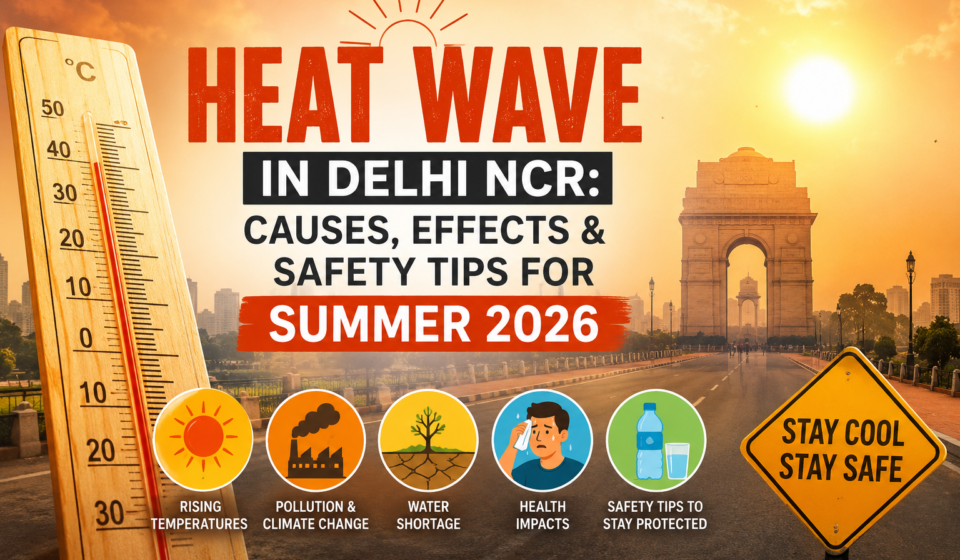

Heat Wave in Delhi NCR: Causes, Effects & Safety Tips for Summer 2026
The heat wave in Delhi NCR has become one of the biggest environmental and health concerns during the summer season. Every year, temperatures in Delhi, Noida, Gurugram, Ghaziabad, and Faridabad continue to rise, making daily life difficult for millions of people. In Summer 2026, weather experts have already warned about severe heat conditions, higher humidity levels, and prolonged hot days across the region.
Extreme heat not only affects comfort but also creates serious risks such as dehydration, heat stroke, exhaustion, and respiratory problems. Understanding the causes, effects, and preventive measures can help people stay safe during this intense summer season.
What Is a Heat Wave?
A heat wave is a prolonged period of excessively hot weather where temperatures remain significantly above normal for several consecutive days. In India, the Indian Meteorological Department (IMD) declares a heat wave when temperatures cross specific limits and remain unusually high.
In Delhi NCR, temperatures during peak summer often reach 44°C to 48°C, making outdoor activities dangerous, especially during afternoon hours.
Major Causes of Heat Wave in Delhi NCR
1. Climate Change
One of the biggest reasons behind the increasing heat wave in Delhi NCR is global climate change. Rising greenhouse gas emissions are increasing the earth’s average temperature, leading to more frequent and intense heat waves.
2. Urban Heat Island Effect
Delhi NCR is heavily urbanized with concrete buildings, roads, and reduced green spaces. These surfaces absorb and retain heat, making cities hotter than nearby rural areas.
3. Air Pollution
High pollution levels trap heat in the atmosphere and worsen weather conditions. Dust, vehicle emissions, and industrial pollution contribute to rising temperatures.
4. Deforestation and Lack of Green Cover
The rapid cutting of trees for urban development has reduced natural cooling systems in Delhi NCR. Fewer trees mean less shade and lower moisture in the environment.
5. Dry Winds from Rajasthan
During summer, hot and dry winds called “Loo” blow from Rajasthan toward Delhi NCR, increasing daytime temperatures significantly.
Effects of Heat Wave in Delhi NCR
1. Health Problems
Extreme heat can cause several health issues, including:
- Dehydration
- Heat exhaustion
- Heat stroke
- Low blood pressure
- Headache and dizziness
- Skin problems
- Breathing difficulties
Children, elderly people, pregnant women, and outdoor workers are at the highest risk.
2. Water Shortage
The heat wave increases water consumption, leading to shortages in many parts of Delhi NCR. Groundwater levels also decline rapidly during extreme summer.
3. Increased Electricity Demand
People rely heavily on air conditioners, coolers, and fans during heat waves. This increases electricity consumption and sometimes causes power cuts.
4. Poor Air Quality
Hot weather combined with pollution can worsen air quality and trigger respiratory diseases such as asthma and allergies.
5. Impact on Daily Life
Traveling, outdoor work, and public transportation become difficult during peak afternoon hours due to extreme temperatures.
Symptoms of Heat Stroke
Heat stroke is a medical emergency caused by prolonged exposure to high temperatures. Common symptoms include:
- High body temperature
- Rapid heartbeat
- Confusion or fainting
- Dry skin
- Severe headache
- Nausea or vomiting
- Muscle cramps
If someone experiences these symptoms, immediate medical attention is necessary.
Safety Tips During Heat Wave in Delhi NCR
Stay Hydrated
Drink plenty of water throughout the day, even if you do not feel thirsty. Coconut water, lemon water, ORS, and fresh fruit juices are also beneficial.
Avoid Direct Sunlight
Try to stay indoors between 12 PM and 4 PM, when temperatures are usually highest.
Wear Light Clothing
Use loose-fitting, light-colored cotton clothes to keep the body cool.
Eat Healthy Foods
Consume water-rich fruits and vegetables such as:
- Watermelon
- Cucumber
- Muskmelon
- Coconut water
- Orange
- Curd and buttermilk
Avoid oily and spicy food during extreme heat.
Use Sunscreen and Caps
When going outside, wear sunglasses, caps, or umbrellas to protect yourself from direct sunlight.
Keep Your Home Cool
Use curtains, fans, coolers, and proper ventilation to maintain indoor cooling.
Take Care of Children and Elderly
Ensure that children and senior citizens stay hydrated and avoid outdoor activities during peak heat hours.
Government Advisory for Summer 2026
Authorities in Delhi NCR are expected to issue regular heat wave alerts and advisories during Summer 2026. Citizens should monitor weather updates and follow government safety instructions carefully.
Hospitals and emergency services may also remain on high alert during severe heat conditions.
Conclusion
The heat wave in Delhi NCR is becoming more intense every year due to climate change, pollution, and rapid urbanization. Summer 2026 may bring extreme temperatures that can affect health, water supply, electricity usage, and daily life.
By staying hydrated, avoiding direct sunlight, wearing appropriate clothing, and following safety precautions, people can reduce the risks associated with extreme heat. Awareness and preparedness are essential to stay safe during this challenging summer season.
Stay alert, stay cool, and protect yourself and your family from the dangerous effects of heat waves in Delhi NCR.
Top 10 FAQs – Heat Wave in Delhi NCR
1. What is a heat wave?
A heat wave is a period of extremely high temperatures that remains above normal levels for several consecutive days, causing discomfort and health risks.
2. Why is Delhi NCR experiencing severe heat waves?
Delhi NCR faces severe heat waves due to climate change, air pollution, urbanization, reduced green cover, and hot dry winds coming from Rajasthan.
3. What temperature is considered a heat wave in Delhi NCR?
According to IMD guidelines, temperatures above normal limits, generally crossing 40°C to 45°C for several days, are considered heat wave conditions.
4. What are the common symptoms of heat stroke?
Common symptoms include high body temperature, dehydration, dizziness, headache, nausea, rapid heartbeat, confusion, and fainting.
5. How can I protect myself during a heat wave in Delhi NCR?
Stay hydrated, avoid direct sunlight, wear light cotton clothes, use sunscreen, eat cooling foods, and stay indoors during peak afternoon hours.
6. Which people are most at risk during a heat wave?
Children, elderly people, pregnant women, outdoor workers, and people with existing medical conditions are more vulnerable to extreme heat.
7. What foods and drinks help during extreme summer heat?
Watermelon, cucumber, coconut water, lemon water, buttermilk, curd, fresh fruits, and ORS drinks help keep the body hydrated and cool.
8. Can heat waves affect air quality in Delhi NCR?
Yes, extreme heat combined with pollution can worsen air quality and increase breathing problems, asthma, and allergies.
9. What should I avoid during a heat wave?
Avoid going outside during peak heat hours, consuming excessive caffeine or alcohol, eating oily foods, and doing heavy physical activities in direct sunlight.
10. How long does the heat wave season last in Delhi NCR?
Heat wave conditions in Delhi NCR generally occur between April and June, with May and June being the hottest months of the year.