मानसिक तनाव और एंग्जायटी को कम करने के 5 नेचुरल तरीके | How to Reduce Stress

Stress has quietly become one of the biggest health challenges of modern life. From work pressure and financial worries to social media overload and sleepless nights, people everywhere are struggling to find mental peace. According to the World Health Organization (WHO), anxiety disorders affected around 359 million people globally in 2021, making them one of the most common mental health conditions worldwide.
The scary part? Most people don’t even realize that constant overthinking, irritability, headaches, poor sleep, and emotional exhaustion are signs of chronic stress. Life starts feeling like a phone running on 1% battery all day long. You keep functioning, but your inner energy is completely drained. The good news is that nature already offers several powerful ways to calm the mind and improve emotional balance without depending entirely on medication.
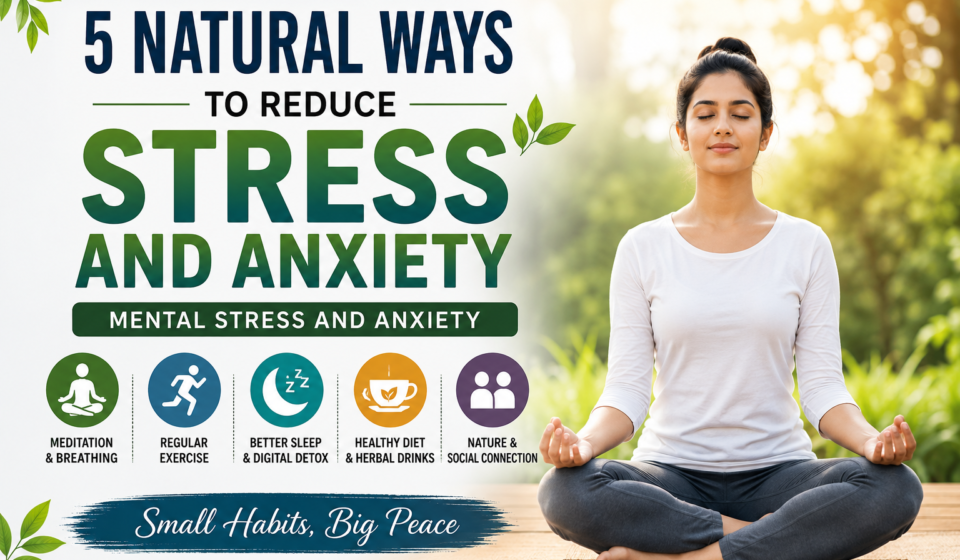
This article explores 5 natural ways to reduce stress and anxiety, backed by modern research and practical lifestyle wisdom. These methods are simple, affordable, and realistic enough to fit into daily life.
Article Outline
- मानसिक तनाव और एंग्जायटी को कम करने के 5 नेचुरल तरीके | How to Reduce Stress
- Understanding Stress and Anxiety in Modern Life
- What Happens Inside the Brain During Stress
- Common Symptoms People Often Ignore
- Why Natural Stress Relief Methods Are Becoming Popular
- The Growing Problem of Burnout and Mental Fatigue
- Natural Way #1 – Meditation and Deep Breathing
- How Meditation Changes Brain Activity
- Easy 5-Minute Breathing Technique
- Natural Way #2 – Regular Physical Exercise
- Best Exercises for Reducing Anxiety
- Why Walking Works Like Therapy
- Natural Way #3 – Healthy Sleep and Digital Detox
- The Relationship Between Sleep and Mental Health
- How Social Media Increases Anxiety
- Natural Way #4 – Herbal Drinks and Balanced Nutrition
- Foods That Naturally Calm the Nervous System
- Ayurvedic and Herbal Support for Stress
- Natural Way #5 – Spending Time in Nature and Building Social Connections
- Why Human Connection Heals the Mind
- Nature Therapy and Emotional Recovery
- Daily Habits That Quietly Increase Stress
- Conclusion
- FAQs
- Understanding Stress and Anxiety in Modern Life
Understanding Stress and Anxiety in Modern Life
Modern life moves fast. Faster than our minds were originally designed to handle. Every day people wake up to alarms, deadlines, endless notifications, traffic, social expectations, and financial pressure. Even when the body is sitting still, the mind often keeps running like a machine that never gets switched off. That nonstop mental activity slowly creates stress, and if ignored for long enough, it can grow into anxiety disorders, burnout, emotional exhaustion, or even depression.
Stress is actually the body’s natural survival response. When the brain senses danger or pressure, it releases hormones like cortisol and adrenaline. These chemicals prepare the body to react quickly. In ancient times this response helped humans survive physical threats like wild animals or dangerous environments. Today, however, the “danger” is usually work emails, toxic relationships, overthinking, or fear about the future. The body still reacts as if survival is under attack, even when there is no physical danger present.
According to WHO, only around 1 in 4 people suffering from anxiety disorders receive proper treatment, which means millions continue struggling silently every day. Many people normalize stress so much that they stop recognizing its symptoms. Frequent headaches, chest tightness, irritability, poor sleep, digestive problems, emotional numbness, and lack of motivation are often connected to chronic stress. Think of stress like rust forming inside the mind. At first it is invisible, but slowly it weakens emotional strength, confidence, and happiness from within.
The encouraging part is that the human mind also has an incredible ability to heal when given proper care. Natural stress management techniques help calm the nervous system, improve emotional stability, and restore mental clarity without creating dependency.
Why Natural Stress Relief Methods Are Becoming Popular
People today are increasingly looking for natural ways to improve mental health because many are tired of living in constant emotional overload. While medical treatments and therapy remain extremely important for severe anxiety disorders, natural methods offer a daily foundation for emotional balance and prevention. They are simple, accessible, and often improve overall physical health at the same time.
One major reason behind this shift is the global rise in burnout. Recent reports suggest that workplace stress, emotional fatigue, and digital overload are affecting millions of people across different age groups. Even teenagers are experiencing anxiety at alarming levels due to academic pressure, social comparison, and internet addiction. WHO reports that mental health conditions among adolescents are becoming one of the leading causes of illness worldwide.
Natural methods work because they focus on restoring balance instead of just suppressing symptoms. Meditation calms the nervous system. Exercise releases mood-boosting hormones. Healthy sleep repairs the brain. Herbal nutrition nourishes the body from within. Spending time in nature reduces overstimulation and mental fatigue. These techniques may sound simple, but their effects can be surprisingly powerful when practiced consistently.
Another reason people prefer natural stress relief is because it gives them a sense of control. Stress often creates feelings of helplessness. Small habits like morning walks, mindful breathing, or reducing screen time can make people feel emotionally stronger and mentally stable again. It is similar to watering a dry plant daily instead of waiting for heavy rain once a month. Tiny habits repeated consistently create long-term emotional resilience.
Natural Way #1 – Meditation and Deep Breathing
Meditation is one of the oldest and most scientifically supported methods for reducing stress naturally. It does not require expensive equipment, complicated routines, or special environments. All it truly needs is a few minutes of stillness and awareness. Yet in a world addicted to noise and distraction, silence itself has become therapeutic.
When people feel anxious, their breathing usually becomes shallow and fast. This signals the nervous system to remain alert and tense. Deep breathing reverses that process by activating the parasympathetic nervous system, often called the body’s “rest and recovery” mode. The heart rate slows down, muscles relax, and mental tension gradually decreases. Even five minutes of controlled breathing can noticeably calm the mind.
Meditation also changes how the brain responds to stress over time. Research shows that mindfulness practices improve emotional regulation, reduce overthinking, and strengthen focus. Instead of getting trapped inside anxious thoughts, meditation teaches the mind to observe thoughts without reacting emotionally to every single one. Imagine sitting beside a busy road watching cars pass by. Meditation helps you watch your thoughts the same way without chasing every passing worry.
Easy 5-Minute Breathing Technique
Try this simple exercise:
- Sit comfortably and close your eyes.
- Inhale slowly through the nose for 4 seconds.
- Hold the breath for 4 seconds.
- Exhale gently for 6 seconds.
- Repeat for 5 minutes.
This technique can be especially helpful before sleeping, during panic episodes, or after emotionally stressful situations. Over time, regular breathing exercises train the body to respond more calmly during pressure-filled moments.
Natural Way #2 – Regular Physical Exercise
Exercise is often described as nature’s antidepressant, and for good reason. Physical activity directly influences brain chemistry in ways that reduce stress and improve mood naturally. During exercise, the body releases endorphins, serotonin, and dopamine — chemicals strongly connected with happiness, relaxation, and emotional balance.
Many people assume exercise only means intense gym workouts or difficult fitness routines. That belief actually prevents countless stressed individuals from starting. The truth is that even simple activities like walking, stretching, dancing, yoga, or cycling can significantly reduce anxiety levels. The body was designed to move. When movement disappears from daily life, emotional tension often builds up like pressure inside a sealed container.
Walking is especially powerful because it combines movement with mental relaxation. A quiet morning walk can work almost like emotional therapy. As the body moves rhythmically, thoughts become less chaotic and breathing naturally improves. People often notice that solutions to problems appear more clearly after physical movement because exercise increases blood flow to the brain and reduces mental clutter.
Best Exercises for Reducing Anxiety
| Exercise Type | Mental Health Benefit |
|---|---|
| Walking | Reduces overthinking and improves mood |
| Yoga | Relaxes muscles and lowers cortisol |
| Cycling | Releases emotional tension |
| Dancing | Improves energy and confidence |
| Stretching | Reduces body stiffness caused by stress |
According to mental health experts, consistent moderate exercise is more effective than occasional extreme workouts. You do not need perfection. You only need consistency. Even 20–30 minutes daily can create noticeable emotional improvements within a few weeks.
Natural Way #3 – Healthy Sleep and Digital Detox
Sleep is not laziness. It is emotional repair. Unfortunately, modern lifestyles treat sleep like an optional activity instead of a biological necessity. People stay awake scrolling through phones, binge-watching content, replying to late-night messages, or worrying endlessly about tomorrow. The result is a mentally exhausted society operating on poor-quality sleep.
Lack of sleep directly increases stress hormones and weakens emotional control. After a bad night’s sleep, even small problems feel bigger. Irritation increases, concentration drops, and anxiety becomes harder to manage. The brain loses its ability to process emotions calmly. It is similar to trying to drive a car with low fuel and damaged brakes at the same time.
Social media also plays a major role in modern anxiety. Endless comparison, negative news, unrealistic lifestyles, and constant notifications overstimulate the brain. People may physically rest at night while their minds continue consuming information nonstop. This creates emotional fatigue and mental restlessness that slowly damages psychological well-being.
Tips for Better Sleep and Lower Stress
- Avoid screens 1 hour before bedtime.
- Keep the bedroom dark and quiet.
- Reduce caffeine intake in the evening.
- Maintain a fixed sleep schedule.
- Practice breathing exercises before sleeping.
A digital detox does not mean abandoning technology completely. It simply means creating healthier boundaries. Even reducing screen time by one or two hours daily can improve mental clarity and emotional stability.
Natural Way #4 – Herbal Drinks and Balanced Nutrition
Food affects the mind more than most people realize. The brain requires proper nutrients to produce mood-regulating chemicals and maintain emotional balance. Poor eating habits, excessive sugar, processed foods, dehydration, and irregular meals can quietly worsen anxiety and stress levels.
Natural herbal drinks have been used in traditional wellness systems for centuries. Herbal teas containing chamomile, tulsi, ashwagandha, ginger, or lemon balm are known for their calming properties. These herbs help relax the nervous system and reduce mental fatigue naturally. Ayurveda especially emphasizes the connection between digestion, emotional health, and mental stability.
Balanced nutrition also plays a huge role in reducing stress. Magnesium-rich foods like bananas, nuts, spinach, and seeds support nervous system health. Omega-3 fatty acids found in walnuts and flaxseeds may help improve mood and brain function. Hydration is equally important because even mild dehydration can increase fatigue and irritability.
Foods That Naturally Support Mental Calmness
| Food | Benefit |
|---|---|
| Bananas | Support serotonin production |
| Almonds | Rich in magnesium |
| Green Tea | Contains calming antioxidants |
| Yogurt | Supports gut-brain connection |
| Dark Chocolate | Helps improve mood in moderation |
Think of the brain like a high-performance engine. If poor-quality fuel goes inside continuously, performance eventually suffers. Healthy nutrition creates a stronger foundation for emotional resilience and mental clarity.
Natural Way #5 – Spending Time in Nature and Building Social Connections
Human beings are not designed to live isolated inside concrete walls all day. Nature has a deeply calming effect on the nervous system. Fresh air, sunlight, greenery, rivers, parks, and open spaces naturally reduce mental overstimulation. Even short periods spent outdoors can lower stress hormones and improve emotional balance.
Nature slows the mind down. In cities, the brain constantly processes noise, traffic, screens, advertisements, and social pressure. Natural environments give the brain a chance to recover from sensory overload. This is why people often feel emotionally lighter after visiting mountains, beaches, forests, or even a quiet garden.
Social connection is equally important. Stress becomes heavier when carried alone. Meaningful conversations, emotional support, laughter, and human companionship create psychological safety. WHO also highlights the importance of social support and emotional connection in improving mental well-being.
Interestingly, discussions online also show that people who improve stress management often become more emotionally open and socially positive over time. Emotional healing affects not only mental peace but also personality, confidence, and relationships.
Simple habits like sitting in sunlight, talking honestly with trusted people, gardening, walking in parks, or spending time with family can reduce emotional heaviness more than many people expect.
Also Read
5 Subtle Signs of an Impending Stroke You Should Never Ignore
Daily Habits That Quietly Increase Stress
Many people search for stress relief while unknowingly maintaining habits that increase anxiety every day. Chronic stress is often less about one major problem and more about hundreds of small unhealthy routines repeated consistently.
Some common stress-triggering habits include:
- Constant phone checking
- Multitasking all day
- Skipping meals
- Poor hydration
- Negative self-talk
- Lack of physical movement
- Overworking without breaks
- Consuming too much negative news
The mind needs recovery time just like muscles after intense exercise. Yet many people push themselves emotionally every day without rest. Eventually the nervous system becomes overloaded. That is when burnout, emotional numbness, and anxiety begin taking control.
Creating mental peace is not about escaping life completely. It is about building healthier rhythms inside everyday life. Small daily changes may seem insignificant initially, but over months they create major emotional transformation.
Conclusion
Stress and anxiety have become deeply connected with modern living, but they do not have to control your life forever. Natural stress relief methods work because they support the body and mind together rather than treating emotions like isolated problems. Meditation calms racing thoughts, exercise releases emotional pressure, quality sleep repairs the brain, balanced nutrition strengthens mental stability, and nature reconnects people with inner peace.
The most important thing to remember is that healing rarely happens overnight. Mental wellness grows gradually through consistent habits, self-awareness, and patience. Think of emotional health like building physical strength. One workout cannot transform the body, but daily effort eventually changes everything.
If stress has been affecting your sleep, relationships, confidence, or happiness, start with one small habit today. A 10-minute walk. A breathing exercise. Less screen time before bed. One honest conversation with someone you trust. Tiny actions repeated consistently can slowly quiet even the loudest storms inside the mind.
FAQs
1. What is the fastest natural way to reduce stress?
Deep breathing and short meditation sessions are among the fastest natural methods to calm stress because they quickly relax the nervous system and reduce mental tension.
2. Can exercise really help with anxiety?
Yes, regular exercise releases mood-improving chemicals like endorphins and serotonin that naturally reduce anxiety and improve emotional balance.
3. Which foods help reduce stress naturally?
Foods rich in magnesium, omega-3 fatty acids, and antioxidants such as bananas, nuts, yogurt, green tea, and dark chocolate may help reduce stress.
4. How much sleep is necessary for mental health?
Most adults need around 7–9 hours of quality sleep daily for proper emotional regulation, mental clarity, and stress recovery.
5. Is social media linked to anxiety?
Excessive social media use can increase stress and anxiety due to comparison, information overload, poor sleep, and constant mental stimulation.
Disclaimer
This article is for informational purposes only and should not be considered medical advice. Please consult a qualified healthcare professional for proper diagnosis or treatment related to stress, anxiety, or mental health conditions.